
New KLSU Radio-LSU Vet Med podcast debuts with Dr. Taylor Strickland
March 19, 2026
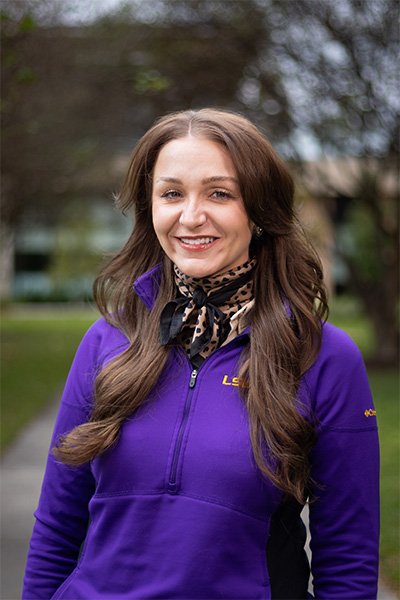
Dr. Taylor Strickland
Starting in early 2026, KLSU Radio’s “Tiger Talk” podcast began featuring LSU Vet Med guests, bringing fresh, monthly perspectives on animal, human, and environmental health. The series debuted with guest Dr. Taylor Strickland, assistant professor of food animal medicine and surgery, who discussed the vital role of animal health and its impact on human health in Louisiana and beyond.
“Tiger Talk” is produced by the KLSU Radio student journalist news team. LSU Vet Med’s participation stems from a special collaboration sparked by discussions between KLSU News Director Kierra Evans and LSU Vet Med Communications Manager Sandra Sarr, establishing a regular guest series. The partnership also reflects a full-circle moment—Sarr previously mentored Evans in the 2025 LSU First-Gen Program before Evans became news director, and now they are collaborators on the podcast.
“Tiger Talk” episodes are distributed across platforms including YouTube, Spotify, iHeartRadio, Apple Podcasts, and LSU’s official channels, extending expert insights on animal health, wildlife research, scientific advances, and clinical success stories to a broad audience.
Experience the debut episode with Dr. Taylor Strickland
Check out these highlights from the Dr. Taylor Strickland’s episode. You might be surprised by what you learn and how it impacts your life.
Q: Would you please introduce yourself and what you do?
A: I'm Doctor Taylor Strickland. And, probably what you'll learn through this is I like cows a lot, and, that's mostly what I do. I'm a cow doctor. I serve as an assistant professor of food animal medicine and surgery, which means I care for a wide range of hoofed animals—cows, goats, sheep, pigs, llamas, and alpacas—if you have a giraffe, bring it!
Q: What does a typical day look like for you?
A: My days start by checking in with interns and students who evaluate patients overnight. From there, we move through treatments, procedures, and the occasional emergency. You never know when your goat's not going to be able to go to the “bathroom” anymore or when your potbelly pig is going to eat a sock. I also get to teach while I practice, which is one of the best parts of working in academia. On any given day, I might be trimming cow hooves, delivering goat babies, or even calming animals. You do what you’ve got to do. The unpredictability is what makes it exciting.
Q: What inspired you to go into this field?
A: I grew up in a rural part of southwest Georgia with a small herd of cattle. Showing cattle from a young age shaped my path. I loved being around the animals and the people who cared for them. Eventually, I realized I could combine my interests after asking and answering myself, “How can I be a doctor and also just be with cows all day. It was like, well, then, be a cow doctor.”
Q: How would you explain food animal medicine?
A: It’s a broad and evolving field. Traditionally, it focuses on keeping animals healthy so they can safely contribute to the food supply. But it has expanded. We now care for animals that are part of food systems, companions, and even athletes. For example, some cattle are high-value show animals or “bovine athletes” in rodeos. These animals receive specialized care—nutrition, chiropractic work, and more. The field spans production, companionship, and performance.
Q: How important is population health in your work?
A: It’s central. In food animal medicine, we don’t just look at one animal—we look at the whole herd. We rely on epidemiology and data to track disease and understand how it spreads. I can’t just look at one animal versus looking at the herd, you know, as a whole. My training includes both population health and internal medicine, so I’m constantly shifting between the big picture and individual care.
Q: When do animals begin producing food products, and how long are they raised?
A: It depends on the system. Dairy cows begin producing milk after their first calf, usually around two years old, and may remain productive for six to eight years. Beef cattle raised for meat are typically processed younger, often around one year old. There are also cases where injured animals can still be safely used in the food supply. Throughout, the goal is efficiency and respect for the animal, using as much of it as possible—everything from meat to byproducts like leather, gelatin, and even components in everyday products.
Q: Is climate change affecting livestock production?
A: It’s an ongoing conversation. There’s increasing focus on improving efficiency—using less water, optimizing feed, and reducing emissions. Researchers are exploring ways to adjust feed and digestion processes to lower methane output. While livestock are part of the discussion, they are not the sole contributors to climate change. The key is continuing to study and improve practices while maintaining food production.
Q: Does food animal health connect to human health?
A: Absolutely. Herd health principles mirror human public health. Disease can spread quickly through populations, and individual actions impact others. The pandemic highlighted this connection. There’s also a growing need to reconnect people with where their food comes from. Many consumers are disconnected from the systems that produce their food, and food animal medicine plays a role in ensuring that food is safe and responsibly produced.
Q: How do veterinarians ensure food safety?
A: A big part of my work involves pharmacology and regulation. We carefully select medications and follow strict guidelines, including withdrawal times—how long after treatment an animal must wait before entering the food supply. There are certain drugs that have an absolute zero tolerance. These safeguards ensure that food products are free of harmful residues and safe for consumption.
Q: Why is this work especially important in Louisiana?
A: Louisiana has a diverse food system that includes livestock, wildlife, and aquaculture. Veterinarians help monitor diseases that could impact wild game, like avian influenza, and oversee health in farmed fish and seafood. These industries are vital to the state’s economy and culture, and veterinary oversight helps protect them.
Q: What can the public do to support food animal health?
A: The most important step is education. People should stay curious about where their food comes from and think critically about the information they encounter. Just going a step further and getting involved with where your food comes from is important—and also having that critical-thinking lens. Even small actions like asking questions and learning more can make a difference.